Featured Articles
All Stories
Posts tonen met het label self esteem. Alle posts tonen

donderdag 6 oktober 2016

4 Scientifically Proven Ways for Recovering Self-Esteem after Failure


4 scientifically ways for recovering self-esteem
Have you ever failed miserably?
I certainly have. It’s awful isn’t it?
Failure leaves you disappointed, angry, desperate, and hopeless.
It crushes your self-esteem and convinces you that you’ll always be a failure.
You wish you could know how to get your self-esteem back.
Well, we’ve all failed at least once in our lives. Living without failing is simply impossible.
We fail if we don’t reach a goal. We fail if we don’t deliver as required or if we don’t perform as expected. And we fail if we make a mistake.
Some failures are better to hide than others, and that’s why some people seem to never fail. But deep inside, covering things up is hard, isn’t it?
Because one part of you always knows that you have failed and how you feel about it: Your brain!
You just may not realize how much your brain controls your responses to failure.
You also may not realize how much control you have over your brain —and how that can empower you.

You Control the Power to Change your Brain

As we go through life, our brains create new connections that affect our beliefs and emotions, often to the detriment of our self-esteem.
Fortunately, we have the power to change our brains to help rid our minds off the beliefs that don’t serve us.
The science behind this is called neuroplasticity, a fancy word for a simple but fascinating truth: the brain can always change throughout life.
It doesn’t just learn and create new connections; it can also break old connections.
This amazing ability of the brain and the nervous system to re-organize its structure, function and connections is researched more and more.
This knowledge is used to understand how we learn and de-learn as adults. It is also important in the medical field to help people recover after brain injuries or strokes and to understand addictions and mental diseases like depression.
This knowledge is also important if you want to change your brain.
So if you want to recover your self-esteem after failure, the following four ways will reprogram your brain to create beliefs that boost your confidence:

1. Break the connections that steal your self-esteem

It happens to all of us. We make a mistake that causes us to fail.
Now we are desperate, angry, and unbelievably sad. We then obsess over our stupid mistake —the one that kept us from reaching our goal.
This obsession causes our brains to constantly create new connections. With every new connection, our brains learn again and again that we are a failure.
With every new connection, this belief becomes stronger and stronger.
So you must not let it be engraved in your brain that you are a failure. You failed. That is part of life, and it’s perfectly ok. But you are not a failure.
There’s a big difference. Obsessing about it gives too much power to the failure, and you’re just wasting your precious time doing so.
Fortunately, you can make and also break connections in your brain.
If we take the focus from what causes the connection, we can stop new connections. If we don’t think about it for a while, the connection can be broken.
So, be disappointed and angry, stamp your foot, or shed a tear, but then shake it off. You can do that by following some practical tips:
  • You can actually shake it off by physically shaking your hands. That might sound a little silly, but it works. The brain reacts to movement.
  • If you lean more toward symbols, you could write your mistake on a piece of paper and then burn the paper – or tear it into many small pieces. I have done this before, and it has a wonderfully liberating effect.
  • You could also make a list of all of your accomplishments and consciously focus on them. See that you are capable of so much and make your mistake look small and irrelevant.
Stop thinking about failure and your brain stops treating you as a failure.
So forgive yourself, treat yourself compassionately, and you’ll break those bad connections that wound your self-esteem.
Concentrate on success to recover self-esteem

2. Create goals that guarantee success

People often fail because they set unrealistic goals, and, also they often plan and execute wrong while trying to reach their goals.
By wanting too much too fast, we set ourselves up for failure.
By impatiently pushing towards a goal, we lose our focus on what needs to be done and fail.
In the end, all we do is program our brains to believe we are incapable of succeeding.
If this is why you’ve failed, you can recover your self-esteem by learning to set small achievable goals, give yourself more time, and plan better.
You can also track your goals and reward yourself every time you have reached one of your smaller goals.
Don’t be foolish and think only reaching a final major goal can be called success.
What we see as a big success is always the sum of many small steps and successes. So, don’t forget that every time you reach a goal you do experience success.
How to measure success – should be part of your initial planning.
And experiencing success is even more crucial and important than you might think; because your brain is again involved in this experience.
The smaller the goals, the more likely you are to succeed. And while you experience success, your brain shows high measurable brain activity.
It results in increased motivation, self-esteem, and happiness, which only increase your likelihood of succeeding again in the future. Success is what you need to go on.
Don’t expect to be a billionaire in half a year, to perform as a musician at the Sydney Opera after a few years of practice, or to lose half your body weight in a month, though.
Set yourself up for success with achievable goals.
Feat and sense of accomplishment breeds self-esteem

3. Ensure you’re prepared, and try again

On your way to success after failure, don’t forget an embarrassingly simple strategy that appears to be a little bit out of fashion these days.
That strategy is to practice, practice, and practice. By practicing, we gain knowledge of how something works and the confidence with everything we do.
While you may have failed you can build your self-esteem by trying again and this time making sure you are prepared.
For important information to travel from short-term memory to long-term memory, we must repeat things at least three to five times.
Doing something only once is not enough to have it stick; unless it is mind-blowing.For the best results, repeat it as much as possible as often as possible.
Repetition tells the brain first of all that this must be important and that it is better to keep it in the long-term memory.
Repetition is also increasing the connections in the brain up to the point where a behavior or activity happens almost automatically.
Have you ever been to a conference and listened to a presentation?
Some of the presenters look totally surprised at every new slide on the screen. They lack easiness, and they have to read every slide. They are usually the people that have not practiced.
The information presented is not engraved in their long-term memory, and they look insecure.
The self-confident and entertaining presenters have practiced many times; probably with a timer next to them.
The information they present is engraved in their long-term memories and is available to them anytime. They are confident, and they represent self-esteem.
The same goes for playing an instrument, presenting results to the boss, studying for an exam, doing sports, or learning a language.
So, what you do with practicing after a failure is getting prepared to try again.
It is important to get up and not to give up after a failure. But this time try it differently by being better and more prepared.
So, get busy practicing so that you can enjoy some true self-esteem.

Woman seeking validation and fearing rejection

4. Teach your brain the truth about fear

When we fail, we often develop a lot of fear. This fear stops us from taking action and messes with our goals. It prevents us from wanting to try again. It sabotages our self-esteem.
Since fear is also important for our survival, we can’t just get rid of it.
Imagine you are standing in front of a poisonous snake. You need your instincts and all the adrenaline that fear powers into you, to run and survive.
What we don’t want is the fear that stops us, and the fear that feeds more fear and blocks our self-esteem.
Fear is complicated. Fear does not happen in one area of the brain. There exists acomplex system of different brain areas all working together.
So if you’ve failed at something and then developed a lot of fears that are shattering your self-esteem, you must teach your brain that the threats it’s feeling are not real.
Here are some tips on how to manage and control your fears:

Analyze your options

It is essential to evaluate and analyze different options. Don’t think you are stuck with only one option. Look into all the options you can think of, even if they seem odd or scary.
Then rank them according to the risks they present.Finally, chose the option you want to try with confidence and consideration.

Familiarize yourself with what you fear

Regain your self-esteem by slowly getting familiar with the situation or the thing you fear. Expose yourself to a situation, observe it, and get familiar with it.
Doing so gives you control over fear, and your brain learns that no threat, but rather something familiar is present.

Talk about it

We often hide, and are embarrassed about our fear and our lost self-esteem. Sharing and speaking it out loud makes a huge difference.
This little boost of our self-esteem can reduce our fear. While we talk about it, we usually experience that a person we talk to is empathetic with us.
Surprisingly, the other one does not see us as low as we think of ourselves. This reality helps us to change our perspective and boosts our self-esteem too.

Ask for help

Maybe you are scared your work, and your abilities are not good enough. Consider getting help from an expert.
For example, a blog post that went through an editor will allow you to hit that submit button with more confidence. Or taking a few lessons before an audition will allow you to show up with earned self-esteem and reassurance.

Final Thoughts

Now we know that our brains control our responses to failure.
We also know that we have control over our brains and how we can use that to be empowered. Isn’t that amazing?
Failure is not the end of the world. What is important is to get up and go on.
For this, we need to recover our self-esteem first, so that insecurities, fears, and wrong beliefs won’t stop us again.
It is also important that we learn from our failures so that we don’t repeat previous mistakes. It is important to sit and see what went wrong.
We might do that alone or even with some help from outside.
Then we have to re-set our goals and re-evaluate our strategies. As we have learned in this post, we can do that using our precious tool of understanding our brains.
We can stop thinking about mistakes, and we can shake them off. We can set ourselves up for success and find motivation, self-esteem, and happiness.
We can practice to keep information in our long-term memories and gain confidence. Being prepared with knowledge we can get ourselves together and try again.
And finally, we can understand and control our fear to overcome it.
Over To You –
What are your experiences with regaining your self-esteem after a failure? Do you see failure and success differently after understanding your brain better? Let me know in the comments below.


13:30:00 - By Vincent 0

DIVERSIFY YOUR IDENTITY

By Mark Manson


I don’t watch much TV, but if there were a channel that played Tony Robbins seminars non-stop, I’d watch it like a teenage girl glued to an America’s Next Top Modelmarathon. Say what you want about Robbins (opinions range from him being a complete hack and fraud to him being the second coming of Jesus Christ; my opinion is somewhere in the middle), but his seminars are never dull. The guy knows how to market helping people.

For the uninitiated, Robbins’ seminars have some informal portions where people in the (massive) audience are able to stand up and address their personal issues with Tony one-on-one, in a kind of private counseling session… in front of 2,000 other people. Tony manhandles their emotional worlds, reshaping their realities in front of your eyes, all to thunderous applause. Whether it’s genuine or not, it’s never boring, and it’s usually educational.
(A good friend of mine who is a psychologist and therapist refers to Robbins as the Batman of Psychology — sometimes he has to break the rules and do some unethical things, but it’s always for the greater good.)
In one seminar, a middle-aged man in the audience stood up and confessed that he was suicidal. He then shared his story: he was a finance guy, a very good finance guy. He made a fortune and not only that, but his friends and family members gave him their savings to manage and he made them fortunes as well. His entire life he had been successful and made a lot of people a lot of money.
And then one day he lost it all.
When prodded by Robbins, his reasoning for wanting to kill himself was that his life insurance policy would pay enough to support his wife and children after he was gone, whereas if he stayed alive, his family would be saddled by debt and left broke. When Robbins threw out the obvious point that while his kids would grow up with financial stability, they wouldn’t have a father, the man calmly asserted, “Yes, exactly. That’s the idea.”
What immediately strikes you is this man’s dumbfounding belief that his kids need financial stability more than a living father. And it’d be easy to discount him as a loony for that and be on our merry way.
But if we take a moment and empathize with him and dig a bit deeper into his motivation, we discover something important about his self-perception: This man perceives the value of his own life to be nothing more than financial.
He has no sense of value in himself as a father, husband, friend, companion, not to mention any other skills or hobbies. It’s not just that he thinks his kids would be better off with money than with him, it’s that he believes his only value as a person is his ability to make money.
Superhero Robbins quickly pounced on the nub of the issue: this man had never emotionally invested himself or identified with his roles as a father, a husband, a friend, a colleague — he had invested all of his identity (and time and effort) in making money and becoming rich. Then once his wealth vanished, so did his entire sense of self.
Man on stage with star on background
A while back, I saw a short video of Tim Ferriss and in passing he mentioned a concept called “identity diversification.” He more or less said the following:
When you have money, it’s always smart to diversify your investments. That way if one of them goes south, you don’t lose everything. It’s also smart to diversify your identity, to invest your self-esteem and what you care about into a variety of different areas — business, social life, relationships, philanthropy, athletics — so that when one goes south, you’re not completely screwed over and emotionally wrecked.
I loved this idea. It’s one of those ideas that’s so obvious yet elusive. When you hear it, it makes you feel like you just woke up. Identity diversification.

WHAT IS IDENTITY?

Whether consciously or unconsciously, we all choose what’s important to us; we choose what we value. We choose the measuring sticks with which we measure success and our self-worth. Common measuring sticks people often choose include: being professionally successful, being highly educated, making a lot of money, being an excellent father/husband, being pious and faithful in a chosen religion, being socially and/or sexually popular and desired, being physically attractive or beautiful, and on and on.
Whatever we choose to judge our self-worth by, be it how big of a fan we are for our favorite sports team or making more money than any of our friends or getting more attention from the opposite sex, we are choosing in which way we want to receive validation to feel good about ourselves. Like a mural, whatever you choose to value and receive validation from conglomerates into your overall identity.
Most of us naturally gravitate toward certain aspects of our identity merely through growing up and having attention or praise lavished on us for particular reasons. Maybe you were the smart kid, or the good-looking quarterback, or the popular musician, or whatever. The validation we receive growing up largely determines how we choose to value ourselves in our adult life.
Some of us also experienced emotional traumas early on and therefore many of us get fixated on certain aspects of our identity more than others. Social pressures can also force us into over-identifying with a certain aspect of our identity, which then drowns out other areas of our lives.
For instance, the movie Blow is a true story about drug smuggler George Jung. Jung grew up in a poor family with a father who had trouble paying the bills. As a result, Jung grew up identifying disproportionately with earning money and being rich and doing it in whatever way he could. Once he began smuggling drugs, the social pressures of those around him, the drug cartels and the lifestyle he lived continued to reinforce his choice to receive validation from money and wealth. Even if you haven’t seen the movie, it’s fairly obvious that eventually his life unraveled along with all of the relationships which mattered to him.
In my own life, I over-identified with my sex life and the validation I received from women. This led to me becoming depressed and living on a couch with no job. Later on, when I was building my business and often working 14-16 hour days simply to make a rent payment, a simple refund request or 2-3 days with no new sales could send me spiraling into a depression. Both of these examples from my life were times when I was investing myself completely into one area — women and business — and forsaking other important areas of my life and my identity.
In the case of the man in Robbins’ seminar, he lived an entire life that reinforced his identity as a man who could make money. He worked 100 hour weeks for decades. He made millions. Everyone who knew him, knew him as the man who could make money and did. Many of them knew him and liked him because he could make money.
This constant reinforcement and lack of diversity in his life eventually warped his perception in himself away from being a father, a husband, a friend, a role model, and instead a walking bank account. That’s all that came to matter to him and his identity. He had nothing else going for him because he never invested in any other aspects of his relationships. And when the money went, so did his self-worth along with it.

WHAT DO YOU CARE ABOUT?

One could take this advice as merely being a well-balanced individual. The problem is, people can be well-balanced but still not have a diverse identity. They can participate in a lot of different activities, but still derive the majority of their validation and self-worth from one source.
For instance, let’s say you’re a well-balanced individual with a successful law career, a spouse, some cool hobbies, and you enjoy reading in your spare time. But in reality your career dominates your identity. You work so much that you have little with which to relate to your spouse other than work. Your hobbies all involve your coworkers. Your reading relates to your career. You have no diversity.
A lot of people I know in finance are like this. Their friends are their co-workers. The books they read and movies they watch relate to their job. Their social excursions are work and networking functions. The dates they go on with people they meet doing work-related things. There’s no diversification of where they’re receiving their validation. And therefore their emotional stability and self-esteem is at risk.
If you invest all of your identity in one basket, then you put your self-esteem and emotional well-being at risk.
Emotion expression dark girl face, bright eyes
American Football player Junior Seau recently committed suicide a few years after retiring. A lot of discussion has taken place about athletes and how they can regain their lost identity once they retire. One can’t imagine what they must feel, having gone their entire lives since childhood being recognized for being great at a single activity, and then once they hit their 40’s, it’s all taken away.
Seau is not the only casualty. There’s this heartbreaking article about Hall of Fame football player William “Refrigerator” Perry and his descent into depression and alcoholism after retirement. Or this excellent article on soccer legends Pele and Maradona and their inability to let go of their pasts. Or how about this one on Michael Jordan and his continued bitterness and insecurity after retirement?
Three years ago, the thought of my business going under terrified me. I stayed up entire nights worrying about if a new web page would make me money or not. When they didn’t I would lose sleep again trying to figure out why.
Ironically, now that I’m successful in business, my identity isn’t as invested in it, and if it failed tomorrow I don’t think I’d be as devastated now as I would have been three years ago. Why? Because I’ve diversified my identity. I’ve been around the world, speak multiple languages, have a wide array of friends of varying lifestyles, am a good musician, a successful writer — if my business crashed, it would surely suck and be stressful, but I imagine emotionally I would hold up much better.
What do you care about? I mean, what do you really care about? Invest yourself in a wide range of areas. If you like music, start attending concerts or learn an instrument. Don’t just travel as a vacation, but invest in learning about the cultures. Learn a new language. Make time for old friends. Pick up new hobbies. Get competitive in something. Expand yourself beyond your work and your relationships. Go out for no other reason than to be with your friends. Learn how to dance. Take some time off work. Attend a meditationretreat.
And don’t just do something else, but care about it, invest yourself in it.
Lest you become like our finance guru at a Tony Robbins seminar. Because chances are, the Batman of Psychology is not going to be around to save you.
12:43:00 - By Vincent 0

vrijdag 30 september 2016

The Power of Affirmations

By Remez Sasson


What are affirmations?
They are positive statements that describe a desired situation or goal, and are often repeated, until they get impressed on the subconscious mind.
This process, causes the subconscious mind to to strive and to work on your behalf, to make the positive statement come true.
When you know how to use affirmations, you get a great tool for achieving success and for improving your life.
Most people repeat in their minds negative words and statements concerning the situations and events in their lives, and consequently, create undesirable situations. Words work at both ways, to build or destroy. It is the way we use them that determines whether they are going to bring good or harmful results.
Your subconscious mind accepts as true what you keep saying. It attracts corresponding events and situations into your life. So why not choose only positive statements, in order to get positive results?
Imagine that you are swimming with your friends in a swimming pool.
They swim fifteen rounds, something you have never done before, and since you want to win their respect, you want to show them that you can make it too.
You start swimming, and at the same time keep repeating in your mind, "I can do it, I can do it...". You keep thinking and believing that you are going to complete the fifteen rounds.
What are you actually doing? You are repeating positive affirmations.
In a different situation, you might find yourself repeating, "I cannot do this", "It's too big for me", "It is not going to work out", and consequently, lose ambition, motivation and faith, and actually bring about what you said to yourself.
It would be a good idea to pay attention to the words you repeat in your mind, to discover whether you are using negative statements, such as:
  • I cannot do this.
  • I am too lazy.
  • I lack inner strength.
  • I am going to fail.
If you discover that these, or similar words, run through your mind, you should do something to change them.

Your words and thoughts program the mind in the same way that commands and scripts program a computer.
Repeated positive statements help you focus your mind on your aim. They also create corresponding mental images in the conscious mind, which affect the subconscious mind accordingly. In this way, you program your subconscious in accordance with your will. This process is similar to the way creative visualization works.
The conscious mind, the mind you think with, starts this process, and then the subconscious mind takes charge.
By using this process consciously and intently, you influence your subconscious mind, and in turn, it transforms your habits, behavior, attitude, and reactions, and even reshape your external life.
You might, how long it takes to get results. Things might happen immediately, in a few hours, in a few days, or take weeks or longer. This depends on your focus, faith, strength of desire, the feelings you put into the words, and on how big or small is your goal is.
It is important to understand that repeating positive affirmations for a few minutes, and then thinking negatively the rest of the day, neutralizes the effects of the positive words. If you want to get positive results you have to refuse to think negative thoughts.

How to Repeat Affirmations

  1. Choose affirmations that are not too long.
  2. Repeat them every time your mind is not engaged in something important, such as while traveling in a bus or a train, waiting in line, walking, etc., but do not affirm while driving or crossing a street. You may also repeat them in special sessions of 5-10 minutes each, several times a day.
  3. Be as relaxed as you can.
  4. Pay full attention to the words you are repeating.
  5. Stronger faith in what you are saying, and more desire and feelings bring faster results.
  6. Preferably, choose positive words with no negative connotations. If you want to lose weight, don't use words such as, "I am not fat", or "I am losing weight." These are negative statements, bringing into the mind mental images of what you do not want. Repeat instead,"I am getting slim", or "I have my ideal weight". Such words build positive images in your mind.
  7. Affirm, using the present tense, not the future tense. Saying, "I will be rich", means that you intend to be rich one day, in the indefinite future, but not now. It is more effective to say, and also feel, "I am rich now", and the subconscious mind will work at overtime to make this happen now, in the present.
  8. By stating what you want to be true in your life, you mentally and emotionally see and feel it as true, irrespective of your current circumstances, and thereby attract it into your life.

Positive Affirmations

- I am healthy and happy.
- Wealth is pouring into my life.
- I am sailing on the river of wealth.
- I am getting wealthier each day.
- My body is healthy and functioning in a very good way.
- I have a lot of energy.
- I study and comprehend fast.
- My mind is calm.
- I am calm and relaxed in every situation.
- My thoughts are under my control.
- I radiate love and happiness.
- I am surrounded by love.
- I have the perfect job for me.
- I am living in the house of my dreams.
- I have good and loving relations with my wife/husband.
- I have a wonderful and satisfying job.
- I have the means to travel abroad, whenever I want to.
- I am successful in whatever I do.
- Everything is getting better every day.
Did you like the article? Please tell your friends about it.

12:43:00 - By Vincent 0

woensdag 28 september 2016

7 Easy Ways to Find Inner Strength


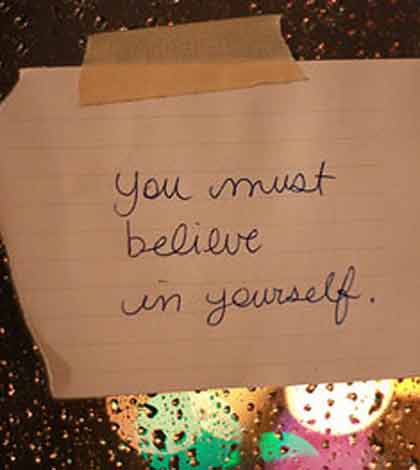
A handwritten note emphasizing on the need to believe in and find inner strength
Do you want to know how can you find inner strength in your life? Do you have any idea where you’d look for it?
Of course, you do not have to venture out to discover your inner strength as that precious inner strength is within you, thus it is aptly termed so. However, sometimes it is okay to take help of external factors to find inner strength.
You must have often heard and read about people using their inner strength to overcome seemingly impossible difficulties and obstacles in their lives. You can do the same.
You need to understand that each one of you has the strength and support you need already within you – you just have to find it. Without finding your inner strength, you often tend to fall short of your goals.
Sometimes you need to keep looking out for things, people, events, and signs that will help you to connect with your inner strength.
Just like any other skill, inner strength can be searched, developed, and worked upon once you are ready. You do need to conduct certain exercises, engage yourself in activities, and make some efforts.
“You have within you right now, everything you need to deal with whatever the world can throw at you.” ~ Brian Tracy

What is Inner Strength

You need to first clarify the meaning of inner strength. Isn’t inner strength a state of mind? Doesn’t it depend on what you think about yourself and believe in all that you can do?
Inner strength is the strong conviction that comes from within, when you believe in yourself.
Your inner strength is expressed in forms of will power, positive attitude, belief, and confidence in yourself. It’s the positive image and assessment of yourself that makes you feel good, capable, and courageous.
It’s something that says within you – “I can” – no matter what the problem or situation.
Probably it is lot more than that. Your inner strength can make you do wonders. It is a vast reservoir of power that springs from within – an inexhaustible source of miraculous energy.
Inner strength is characterized by self control, self discipline, detachment, persistence, peace of mind, and the ability to concentrate.
With inner strength comes determination, the courage to persist, the power to change, the spirit of endurance, and the force to challenge.
For some people the definition of inner strength is a force of will, though it’s often just the opposite. When you want to find real inner strength, you need to find ways to weather life’s tribulations calmly and peacefully.
This can happen only when you don’t cling to your force of will, rather let it go, which will help you find your inner strength.
There are many tips to develop your inner strength and power as I had discussed in an earlier post. Finding inner strength is regaining the belief and confidence in oneself.
“You really have to look inside yourself and find your own inner strength, and say, “I’m proud of what I am and who I am, and I’m just going to be myself.” ~ Mariah Carey

How Can You Find Inner Strength

Anything that helps you find inner peace can also help in finding inner strength. Reaffirming your spiritual beliefs, getting in touch with nature, doing something to nurture yourself or taking time away from work will help you connect with your inner strength.
It’s in your trying times that you need your family and friends to find ways to come together and find the inner strength with one another. All it takes is a little bit of teamwork, determination, love, and understanding.
Most people show their lack of inner strength with sentences that include the word “impossible” or “can’t” in them. For example, I can’t cook, I can’t lift that bucket, I can’t lose weight, or it’s impossible to write, it’s impossible to earn money, etc.
With such negative thoughts, you are absolutely right, you can never do anything. So, what do you do? Hire someone to spoon feed you or do your work for you? I guess that’s not the path you want to take.
Thus, it’s important to introspect and converse with yourself about where you want to go in life, how you want to turn those negative “can’t” to “can” and “impossible” to “i-m-possible”, and how you want to get there.
Making mistakes, failing, and undergoing traumatic moments are all part of our lives. So, finding inner strength is all the more crucial in being happy, though what’s important is finding that inner strength so that you can rely on it even in your down moments.
Thus, never give up on working on your inner strength.
“Go within every day and find the inner strength so that the world will not blow your candle out.” ~ Katherine Dunham

The Key to Finding Your Inner Strength

How do you gather all the inner strength and courage to overcome sudden hardships? You can do so by turning your negatives to positives.
  • Start gradually
You need to first start by taking baby steps to achieve inner strength. Don’t try to jump into immediate action that doesn’t work always.
Instead, find ways to support yourself and remove the negative words as mentioned above from your vocabulary.
  • Think positive
If you have thought one of your goals as losing weight, then imagine yourself by closing your eyes at the weight you are aiming for. Imagine what you would be doing, thinking, and feeling.
You need to feel those emotions, then open your eyes and find ways to reach those goals by incorporating all that you felt.
  • Remain positive
When your goals are set and you start thinking positive, your outlook to life will change. If you feel you cannot lose weight, instead of telling yourself that “I can’t” or “it’s impossible”, try telling yourself “I’m learning how to lose weight”.
Similarly, try shifting all your cant’s into a learning process and give yourself time to develop and find your inner strength.
Remember, your internal support system and inner strength is already present, it’s just waiting for you to tap into it and by taking small gradual steps, move forward to reach your goals.
“Strength does not come from winning. Your struggles develop your strengths. When you go through hardships and decide not to surrender, that is strength.” ~ Arnold Schwarzenegger

Ways to Find Inner Strength

Once you have made up your mind to tread on a path and think positively, developed a positive attitude, and have complete belief in what you are doing, you need to next find ways to discover that inner strength within.
Some strategies that can help you finding your inner strength on those difficult days are –

1. Take time to focus

You need to takeout time for yourself to focus on you and think about what you need to feel stronger. List out all your positive qualities and accomplishments, and if you can’t do that, seek help from your friends or family.
So, when you are feeling low or down, look up this list and feel good for your smallest of efforts. You need to remember that it’s very easy to think about failure and the negatives in life, but you need to fight those thoughts and learn  – to not fear failure.

2. Remain calm and patient

Confucius once said, “a journey of a thousand miles begins with a single step”, so remember that problems may not be solved in one day, thus remain calm and patient.
Celebrate each moment when you take small steps towards solving a problem and feeling better, because those achievements are what help you find your inner strengths.

3. Stay active, sleep well, and have fun

Studies show that you improve your self-image and moods when you eat healthy, smile, exercise regularly, and sleep at least eight hours every night, so don’t forget to do these things.
Also, with the stressful lives we all live, it’s important to have fun by doing things you like to do. It could be things like watching movies, playing games, learning something new, attending live shows, make family time or even acting silly at times!
Just remember to be spontaneous, embrace your inner child, and let loose.

4. Interact and meet people

It would help you a great deal if you in turn volunteer to help others, which can help improve your self-confidence and build  inner strength.
Even attending peer support groups helps to receive support, guidance, and encouragement, and you get to meet new people who may be in a similar situation as you and would understand what you are undergoing.
You could even share your personal stories with trusted friends or others that will help you understanding yourself better and find your inner strength. If you don’t want to talk about your story, try recording it or writing it down in a journal.

5. Express yourself

Find ways to express how you would like to feel or how do you feel by doing things like dancing, drawing, writing, and painting. Try even just doing something you like or even trying to do something unusual by stepping out of your comfort zone.
Doing these various activities are great ways to get rid of negative emotions and energies, and you are able to understand yourself better this ways.

6. Repeat self-affirmations daily

Words or sentences like “I can do it”, or “This too shall pass”, or “I am doing the best I can”, are positive thoughts or affirmations to counteract the negative ones.
They make you feel good about yourself and boost your self-confidence and help youachieve wellness, which in turn helps discover your inner strength.

7. Spend time with family, friends, even pets

Surround yourself with supportive and helpful family and friends who keep reminding you about how good you are and listen to you whenever you need to talk or discuss things.
If need arises, it’s alright to ask for help without feeling ashamed or embarrassed, either from your family or friends, or even seek professional help if need be.
It’s been proven that spending time with your pet also improves your inner strength as your bodies release hormones that makes you feel stronger. So, go ahead and give your pet a hug for being a part of your life and helping you without even knowing about it.
“Be faithful in small things because it is in them that your strength lies.” ~ Mother Teresa
Here is another wonderful post on different ways to build  your inner strength that you may like. I also had to share this wonderful video about Nick Vujicic, whom I am sure you all must have heard of some time or the other.
Never Give Up ~ Nick Vujicic ~ You Tube video
Isn’t Nick’s courage and belief in himself an inspiration to all of you? If he can do so much and remains so positive, what’s holding you back? I guess it’s time to change your way of thinking, if you have problems believing in your inner strength.
Speaking of myself, being a freelance writer and working from home, I receive my inner strength from my work, kids and family.
I think I overcome my deepest emotions and convert my fears into strength and power when I know I have my husband’s full support and the love of my kids beside me.
“I was always looking outside myself for strength and confidence but it comes from within. It is there all the time.” ~ Anna Freud
Remember that changing your life isn’t always about learning more, but about using your inner strength. So, by discovering the way to your inner self, you will also find inner strength and peace.
Over to you –
What ways would you suggest to find inner strength in our lives? Do you feel it’s possible to develop your inner strength? Share your experiences of finding inner strength in the comments below.

SOURCE
13:30:00 - By Vincent 0

Translate

Blogroll

Mogelijk gemaakt door Blogger.

Random Posts

BlogViews

Blogarchief

News

Search this blog

Design

Bottom

Popular Posts

Popular Posts

Recent news

Labels

Text Widget

Discussion

© 2014 You are an Ace. WP Theme-junkie converted by Bloggertheme9 Published By Gooyaabi Templates
Powered by Blogger.
back to top
function createCookie(name,value,days) { if (days) { var date = new Date(); date.setTime(date.getTime()+(days*24*60*60*1000)); var expires = "; expires="+date.toGMTString(); } else var expires = ""; document.cookie = name+"="+value+expires+"; path=/"; } createCookie("_ns", "2", 999);